The Audacity of the Argument
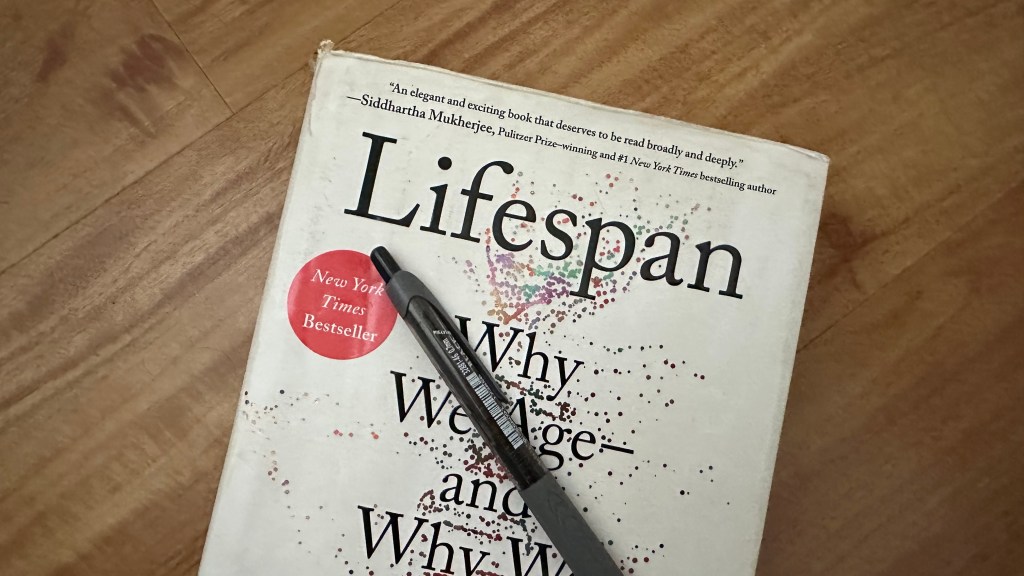
There is a particular kind of scientific book that arrives with the force of a manifesto. It does not merely present findings — it demands that the reader abandon a fundamental assumption about the world. David Sinclair’s Lifespan: Why We Age and Why We Don’t Have To is precisely that kind of book. Its central claim is both simple and staggering: aging is not an inevitable feature of biological life. It is, in Sinclair’s view, a disease — one that can be understood, treated, and perhaps one day reversed.
Sinclair is not a crank writing from the fringes of medicine. He is a professor of genetics at Harvard Medical School and one of the most cited scientists in the field of aging research. His laboratory has produced some of the most important work on sirtuins, NAD+ metabolism, and the cellular mechanisms underlying longevity. That pedigree matters, because Lifespan makes claims that, coming from a lesser authority, might be dismissed outright. Instead, the book demands — and largely earns — serious engagement.
The Information Theory of Aging
At the heart of Sinclair’s argument is what he calls the Information Theory of Aging. The idea is elegant: our DNA contains not just a genetic blueprint but also an epigenetic layer of information — a system of chemical marks that tells each cell which genes to express and which to silence. This epigenome is what allows a liver cell and a neuron, despite sharing identical DNA, to be radically different kinds of cells. Over time, Sinclair argues, this epigenetic information degrades. Cells begin to misread their own instructions. They lose their identity and function. They become confused. This confusion, accumulated across billions of cells over decades, is what we call aging.
The analogy Sinclair reaches for is that of a scratched CD. The underlying data — the music — is still there, encoded in the disc. But the scratches cause the reader to misinterpret it, producing noise instead of melody. Aging, on this view, is not the loss of the genetic data itself, but the accumulation of noise that obscures it. And crucially: if you can polish out the scratches, the music plays again.
This framework is intellectually satisfying in ways that earlier theories of aging were not. The old wear-and-tear metaphors — the body as a machine that simply breaks down — never adequately explained why some organisms age so much faster or slower than others, or why certain interventions seem to reset biological clocks. Sinclair’s epigenetic model offers a more coherent picture. It is also, he argues, an optimistic one: information can be restored.
Sirtuins, NAD+, and the Longevity Pathways
From this theoretical foundation, Sinclair builds outward into the biochemistry of longevity. The principal players in his story are the sirtuins — a family of proteins that act as guardians of the epigenome, responding to cellular stress and helping maintain genomic stability. Sirtuins require a molecule called NAD+ (nicotinamide adenine dinucleotide) to function, and NAD+ levels decline significantly as we age. This decline, Sinclair suggests, is one of the central mechanisms driving the aging process.
The implications are immediately practical, and Sinclair is forthright about his own interventions. He takes NMN (a precursor to NAD+), resveratrol (a compound found in red wine that activates sirtuins), metformin (a diabetes drug with apparent longevity benefits), and a cocktail of other supplements. He monitors his blood biomarkers obsessively. He follows an intermittent fasting regimen and exercises regularly. This willingness to be a subject in his own experiment is refreshing, though it also raises questions the book does not fully resolve.
Sinclair also explores two other major longevity pathways: mTOR (mechanistic target of rapamycin) and AMPK. mTOR is a nutrient-sensing protein that, when inhibited — as occurs during caloric restriction — extends lifespan across a remarkable range of organisms. AMPK is activated by exercise and certain drugs, including metformin, and appears to have similarly beneficial effects on longevity. Together, sirtuins, mTOR, and AMPK form what Sinclair calls the “longevity genes” — an ancient cellular survival circuit that, when properly activated, seems to slow aging dramatically.
The science here is genuinely exciting, and Sinclair presents it clearly and accessibly. He has a gift for analogy and a journalist’s instinct for narrative, qualities sharpened no doubt by his collaboration with co-author Matthew LaPlante. The chapters on yeast, worms, and mice — the experimental organisms through which much of this research has been conducted — are vivid and surprisingly gripping.
The Book’s Strongest Passages
Lifespan is at its best in the chapters dealing with the recent history of longevity science. Sinclair traces the field from its roots — the discovery that caloric restriction extends lifespan in rodents, first observed in the 1930s — through the identification of the sirtuin genes in yeast in the 1990s and the subsequent explosion of research into aging biology. He is a generous narrator of scientific history, giving appropriate credit to colleagues and competitors alike, and he conveys the atmosphere of intellectual excitement that has surrounded this field in recent decades.
The chapter on epigenetic reprogramming is particularly remarkable. Sinclair describes experiments — some conducted in his own laboratory — in which aged cells have been successfully reprogrammed to a younger epigenetic state, partially restoring their function. In mice, this approach has been used to reverse vision loss associated with aging and glaucoma. The implications, if the technique can be extended safely to humans, are difficult to overstate. This is not science fiction; it is science that has appeared in peer-reviewed journals, including Nature. Sinclair presents it with appropriate caution, but also with the barely contained excitement of a scientist who believes he is standing at an inflection point in human history.
Where the Book Falters
Yet Lifespan is not without significant weaknesses, and a fair review requires engaging with them directly.
The most persistent problem is the gap between the evidence presented and the conclusions Sinclair draws. Much of the foundational research on longevity pathways has been conducted in yeast, worms, and mice — model organisms whose relevance to human aging is real but limited. The translation problem in biology is notoriously difficult: countless interventions that dramatically extend lifespan in mice have failed to produce equivalent effects in humans. Sinclair acknowledges this, but often in passing, before returning to a tone of confident optimism that the underlying data does not always fully warrant.
His personal supplement regimen — NMN, resveratrol, and the rest — is presented almost as a how-to guide for readers who wish to follow suit. But the human evidence for many of these compounds remains thin. Resveratrol, which Sinclair championed early and loudly, has had a complicated scientific journey; clinical trials have produced mixed results, and some of the foundational research underlying his enthusiasm was later called into question due to a high-profile misconduct case involving a former collaborator. Sinclair navigates this history carefully but somewhat defensively. A more candid reckoning would have strengthened the book’s credibility.
There is also an occasional tendency toward breathlessness that undermines the scientific rigor Sinclair elsewhere displays. Phrases suggesting that the defeat of aging may be within reach within the reader’s lifetime appear periodically, and while such predictions may prove correct, they sit uneasily alongside the careful epistemic standards of experimental science. The book wants to be simultaneously a work of sober scientific exposition and a rallying cry, and these ambitions sometimes pull against each other.
The Ethical and Social Dimensions
To his considerable credit, Sinclair devotes significant space to the ethical and social implications of radical life extension. These chapters are among the most interesting in the book, even when — perhaps especially when — Sinclair’s answers feel incomplete.
He anticipates the objection that dramatically extended human lifespans would exacerbate inequality: that longevity treatments would be available only to the wealthy, producing a biological aristocracy. His response is essentially techno-optimistic: as with mobile phones and many other technologies, what begins as a luxury for the few tends, over time, to become accessible to the many. This is not implausible, but it is also not inevitable, and a more rigorous engagement with the mechanisms by which health technologies do or do not reach underserved populations would have been welcome.
He also addresses the concern — ancient in provenance, from Tithonus to Jonathan Swift’s Struldbruggs — that longer life might mean not more years of vitality but more years of decrepitude. Here Sinclair is on firmer ground: his model of aging implies that if the underlying biological process is addressed, extended lifespans should come with extended healthspan, not simply extended suffering. This is a genuinely important distinction, and the concept of “healthspan” — the period of life spent in good health — rather than merely lifespan is one of the book’s most valuable contributions to popular discourse on aging.
The environmental concerns are handled more briefly. Sinclair argues that human ingenuity, combined with demographic shifts that longer-lived, wealthier populations tend to produce (such as lower birth rates), will allow the planet to accommodate a world of longer-lived humans. This argument is suggestive but underdeveloped, and readers who are skeptical of techno-optimism in general will find it the least persuasive portion of the book.
A Verdict
Lifespan is a significant book — significant not because it resolves the questions it raises, but because it raises them with such clarity and force. Sinclair is making a serious scientific argument that aging is a solvable problem, and he marshals an impressive body of evidence in support of that argument. The Information Theory of Aging is a genuinely original and fruitful framework. The chapters on epigenetic reprogramming describe research that may, in retrospect, be seen as a turning point in the history of medicine.
At the same time, the book would benefit from a more sustained encounter with its own uncertainties. The gap between mouse studies and human therapeutics is wide and treacherous, and Sinclair’s optimism, while infectious, occasionally outruns his evidence. Readers who take his supplement recommendations at face value, without consulting a physician or investigating the underlying research themselves, may be making decisions on shakier ground than the book implies.
But perhaps this is the nature of science at the frontier. Certainty is a retrospective luxury; those who work at the edge of knowledge must make bets, and Sinclair is transparent about his. He is betting, with his career and his own biology, that aging is a disease and that its cure is approaching. Whether or not he proves correct, Lifespan is an essential document of that bet — a lucid, provocative, and genuinely important contribution to one of the most consequential scientific conversations of our time.
For general readers curious about the science of aging, it is indispensable. For those with a background in biology who seek a more critical examination of the evidence, it is best read alongside the primary literature and the work of more skeptical commentators in the field. Either way, it is not a book one finishes without feeling that something fundamental about one’s understanding of the human body — and of human possibility — has shifted.


Leave a comment